
Web & mobile app Development
One codebase for the browser, iOS and Android, built by the team that connects it to the systems your business already runs.
One codebase for the browser, iOS and Android, built by the team that connects it to the systems your business already runs.







Putting a citizen service on every phone and the web at once.
Extending self-service to mobile without duplicating the portal.
Giving customers ordering, stock and invoices in their pocket.
Replacing paper and spreadsheets with an app wired into back-office systems.
increased engagement rate in one year


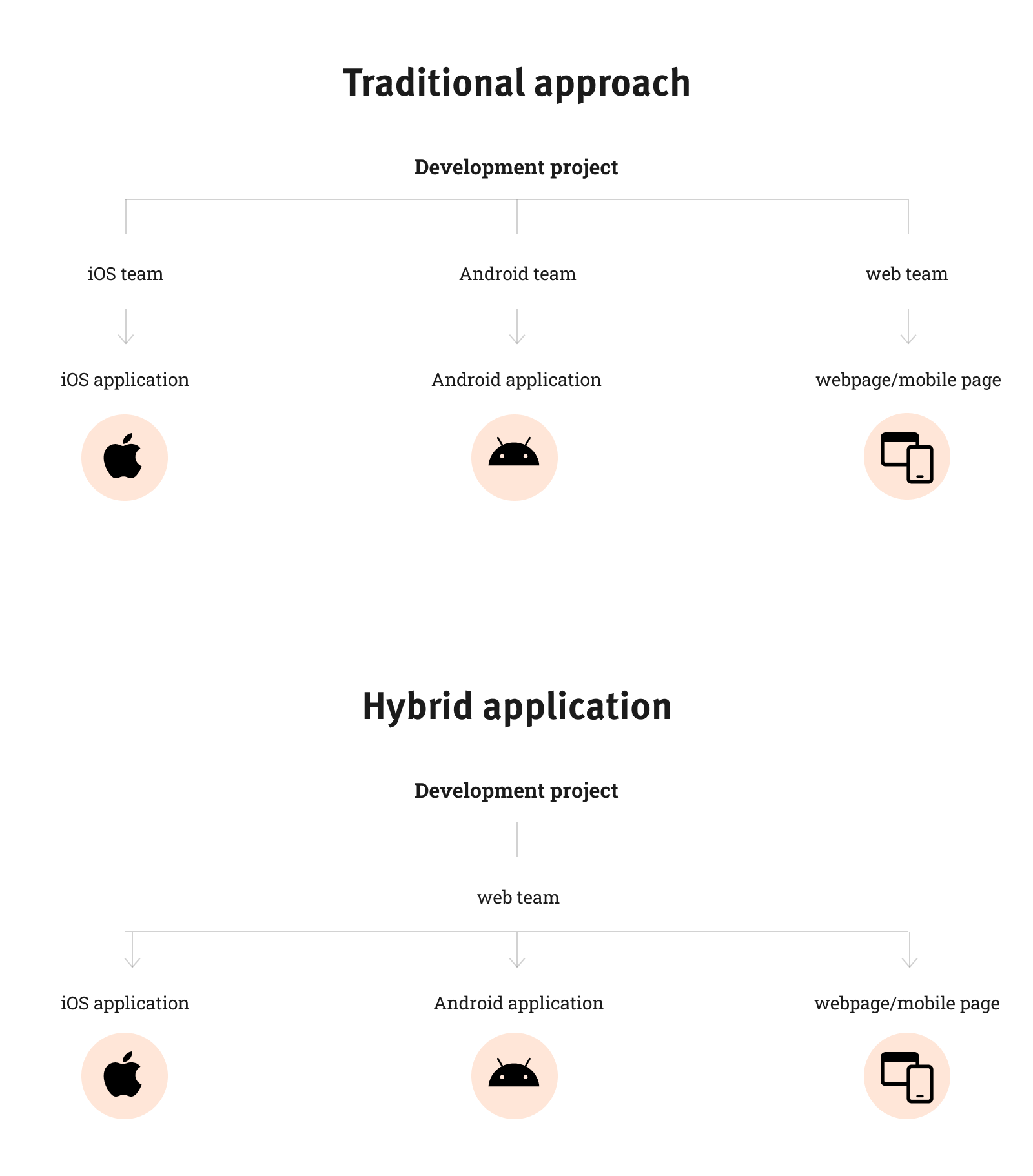
We build your app once and ship it to the web, the App Store and Google Play, and HUAWEI AppGallery where your users need it. One team, one release cycle, one set of business rules. When a regulation changes or a price rule moves, you fix it once, not three times.
Graphics-heavy apps, real-time processing at the edge of what phones can do, or deep use of the newest device features are better served by separate native builds. We don't build native apps, so if your project needs one, we'll say so in discovery, before you've spent anything on the wrong architecture.
Let's Start
Tell us about your platform situation and we'll match you with the right Creatim expert. If there's a genuine fit, the natural next step is a Discovery & Assessment engagement — a fixed-fee, structured piece of work that gives you a concrete architecture blueprint, a phased roadmap, and a realistic budget envelope you can take to your board.
Typical response within one business day. All conversations are confidential.
Hybrid apps are mobile applications developed using web technologies (HTML, CSS, JavaScript) and then wrapped in a framework that allows them to run on multiple platforms (Android, iOS) from a single codebase. Unlike native apps, which are built specifically for each platform, hybrid apps enable faster development and lower costs by using a single codebase for all devices.
Hybrid apps offer a variety of benefits, including:
Access to device features: With plugins, hybrid apps can access various device features, including cameras, GPS, sensors, and more.
Hybrid apps are ideal for most projects, especially those where speed and cost efficiency are priorities. However, for applications requiring high performance (e.g., games with demanding graphics or real-time processing), native apps often provide a better solution.
Advances in technologies like React Native and Flutter have significantly improved the performance of hybrid apps. While they were previously slower than native apps, the differences today are minimal and often unnoticeable to the average user. The performance of hybrid apps depends on the quality of the code and optimization.
Hybrid apps can be just as secure as native apps if developed with best security practices in mind. This includes encrypting data, securing APIs, implementing regular updates, and ensuring compliance with regulations such as GDPR. Choosing an experienced developer who understands the importance of security is crucial.